
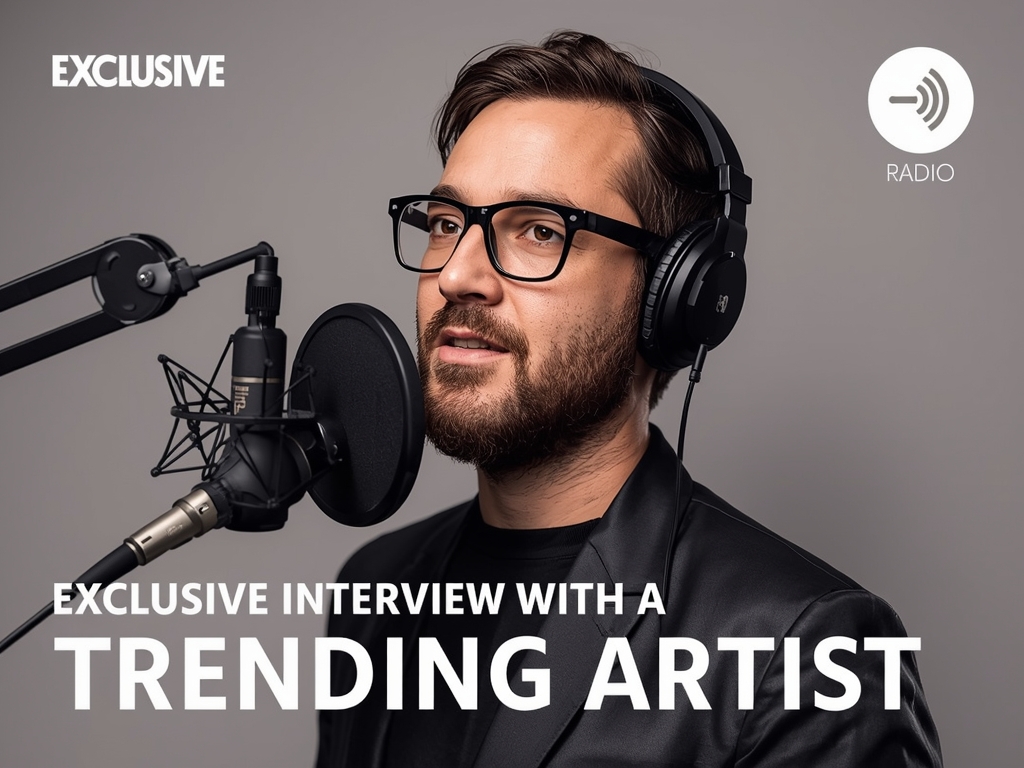
Exclusive Interview: Inside the Mind of JULIA WOLFE, the Neo-Soul Prodigy Turning Heartbreak into Gold
The Setting: A sun-drenched, plant-filled studio in Los Angeles’s Arts District. The air smells of sandalwood incense and the faint, warm hum of analog synthesizers. In the corner, a vintage Fender Rhodes piano sits beside a towering stack of vinyl records. This is the creative womb of Julia Wolfe, the 24-year-old singer, songwriter, and multi-instrumentalist whose debut EP, The Alchemy of Falling Apart, has become a slow-burn sensation, amassing over 100 million streams and landing her a surprise Grammy nomination for Best New Artist.
Wolfe arrives not with entourage, but alone, carrying a ceramic mug of tea. She’s dressed in comfortable, earth-toned linen—a stark contrast to the glittering, hyper-produced pop landscape she’s quietly subverting. Her vibe is immediately calm, centered, and profoundly sincere. The viral success of her lead single, "Phosphorescence" (a haunting ballad about finding your own light in the depths of a breakup), has made her the most talked-about new voice in soul and R&B, yet she seems untouched by the frenzy.
We sit down to discuss the whirlwind, the process, and the person behind the rapidly rising star.
Q: Julia, thank you for having us in your space. It feels like a sanctuary. This has been a monumental year for you. The phrase "overnight sensation" gets thrown around, but your path feels different. Did this success feel sudden to you?
Julia Wolfe: (Laughs softly) Overnight? That’s funny. More like a five-year night. I’ve been writing these songs, playing tiny clubs, and posting snippets online since I was a teenager. What feels "sudden" is the world’s attention, not the work. "Phosphorescence" was written in 2021. It lived on my hard drive, then as a demo on SoundCloud, then as a song I played for 30 people in a coffee shop. So when it blew up on TikTok last year, it was this bizarre time warp. My present self was getting whiplash from my past self’s heartbreak. It’s not an overnight feeling; it’s an archaeology dig where everyone suddenly shows up to look at your bones.
Q: That’s a powerful image. Your music is often described as "neo-soul," but there are clear threads of folk, jazz, and even classic singer-songwriter intimacy. How do you define the sound you’re creating?
JW: I get nervous with genre boxes. To me, it’s just songwriting. I was raised on my parents’ record collection—Joni Mitchell’s Blue, Donny Hathaway’s live recordings, D’Angelo’s Voodoo, Nick Drake. The common thread wasn’t a BPM or a specific chord progression; it was unvarnished truth. It was the sound of a person in a room, telling you a secret that costs them something to share. Technically, yes, I love warm, organic instruments—the Wurlitzer, a muted trumpet, live strings. But the goal is never "let's make a neo-soul track." The goal is, "How do I make the sound of the memory of the scent of rain on pavement when you're saying goodbye?" The genre is just the vehicle for the feeling.
Q: Speaking of feeling, The Alchemy of Falling Apart is a remarkably cohesive and raw journey through a relationship's end. How do you navigate the vulnerability of turning such personal pain into public art?
JW: It’s a contract I make with myself. The vulnerability isn't the price of entry; it is the entry. If I'm not scared a little when I release a song, I probably didn't go deep enough. But there’s a crucial distinction: I’m not a diarist. I’m an alchemist. The real event—the fight, the crying on the kitchen floor—that’s the raw ore. The song is the process of smelting, refining, and shaping it into a object others can hold. By the time it’s a finished song, it’s no longer just my pain. I’ve processed it into a universal shape. Listeners fit their own experiences into it. That’s the magic. They come to me and say, "You wrote exactly what I felt," and I know we’ve connected not on the specifics, but on the human shape of the emotion.
Q: You produced or co-produced every track on the EP. In an era where female artists, especially in R&B, are often funneled through a male producer’s lens, how important was it for you to hold the production reins?
JW: It was non-negotiable. The production isn't just decoration; it's the narrative. The reason "Phosphorescence" has that empty, echoing space for the first minute—just my voice and a single, repeating piano note—is because that’s what depression sounds like. It’s sonic isolation. Then the bass and drums and strings come in like a slow sunrise. A producer I initially worked with wanted to put a four-on-the-floor beat under it from the start to make it "commercial." That would have killed the story! Holding the reins meant protecting the emotional geography of the song. It’s about authorship, in the fullest sense.
Q: One of the most commented-on aspects of your rise is your deliberate pace. No frantic social media posting, no chasing trends. In a culture that demands constant content, why is "slow" your strategy?
JW: (Smiles) Because people are hungry for sincerity, and sincerity can’t be manufactured at algorithm speed. I’d rather post one clip of me figuring out a harmony that genuinely moves me than ten forced, trending dance videos. I think my audience senses that. They’re not just consumers; they’re collaborators in a mood. They come to my page or my shows for a certain atmosphere, a depth charge. If I started behaving like a content machine, I’d break that trust. The music is slow-burn, layered, patient. Why would my presence be any different?
Q: The Grammy nomination changed things. What has been the most surreal moment since your name was called?
JW: Honestly, it was two days later. I was back home visiting my parents in Ohio, and I went to the grocery store with my mom. An elderly woman stopped me in the cereal aisle. She had tears in her eyes. She took my hand and said, "My husband passed last year. 'Phosphorescence' was the only thing that made me feel like the grief wasn't a void, but a place where I could still find him." That was more surreal, more anchoring, and more meaningful than any red carpet or trophy. It was the whole point, right there in front of the Cheerios.
Q: What’s next for Julia Wolfe? Is the pressure on for a full-length album?
JW: The pressure is internal. I’m already deep into the next project. It’s bolder, rhythmically more adventurous. The first EP was about falling apart. The next chapter is about what you build from the rubble—and it’s not always pretty. It’s messy, it’s angry sometimes, it’s rediscovering joy. I’m collaborating with some incredible musicians I’ve admired for years. I’m just following the curiosity. As long as the feeling is true, I trust the path.
Q: Final question. If you could have one listener take away one thing from your music, what would it be?
Julia Wolfe pauses, looks out the window at the Los Angeles sunlight, then back, her gaze steady and clear.
JW: That your softness is not a weakness. That the most profound strength often looks like quiet honesty. And that in a world screaming for your attention, there is immense power in creating a space—even just three minutes at a time—to simply feel. That’s the real alchemy.
As we wrap, Julia offers to play a few chords of a new idea on the Rhodes. The room fills with a warm, melancholic, yet hopeful progression. It’s clear: the sensation may be trending, but the